
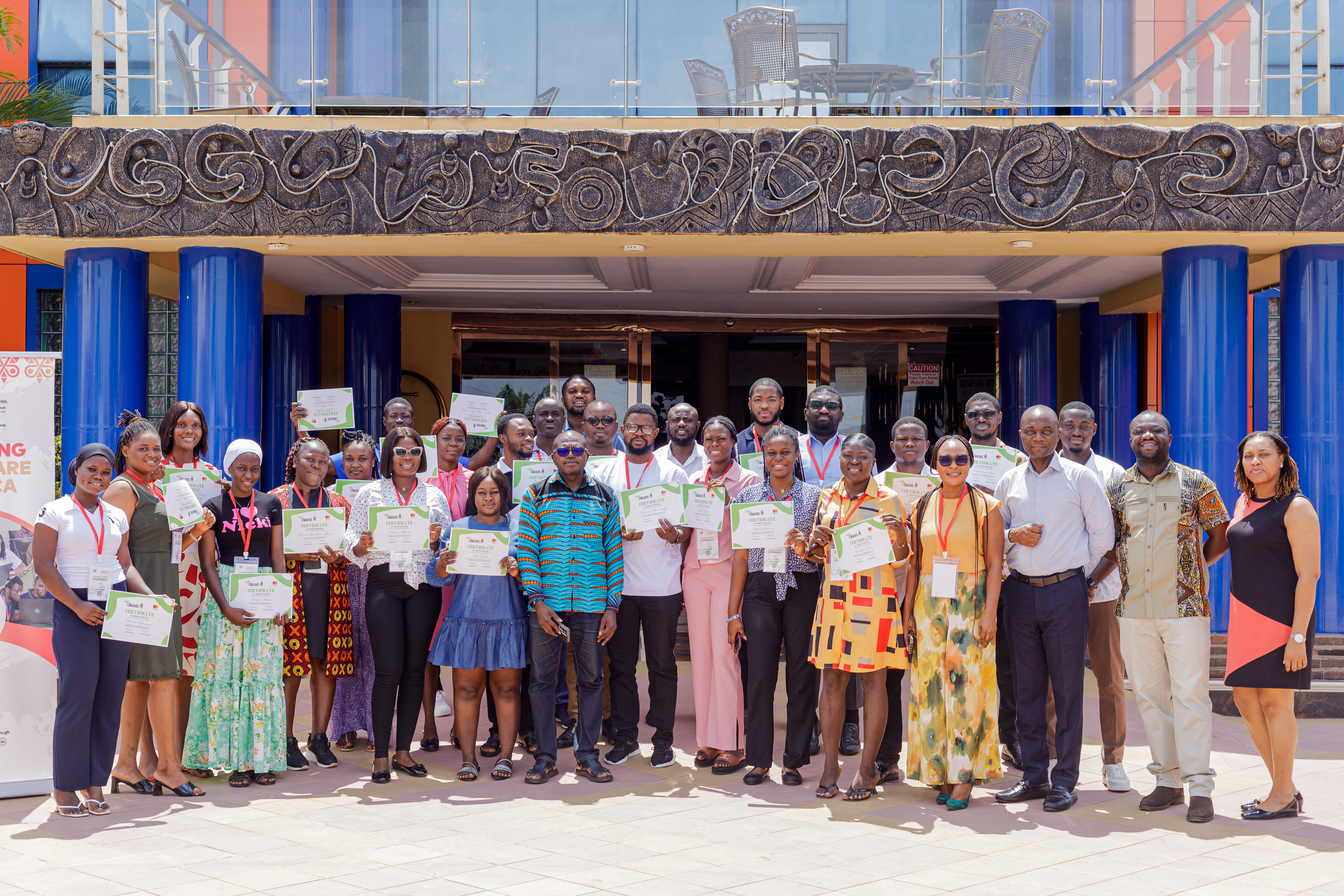
The Africa Health Collaborative at the Kwame Nkrumah University of Science and Technology (KNUST), in partnership with the Mastercard Foundation, has equipped healthcare professionals with transformative skills to improve healthcare delivery.
The programme marked the conclusion of the second cohort of the Community-Based Training (CBT) programme in Health Entrepreneurship. It brought together 25 frontline health professionals from across Ghana for an intensive training focused on mindset transformation, problem-solving, innovation, and community-driven health solutions.
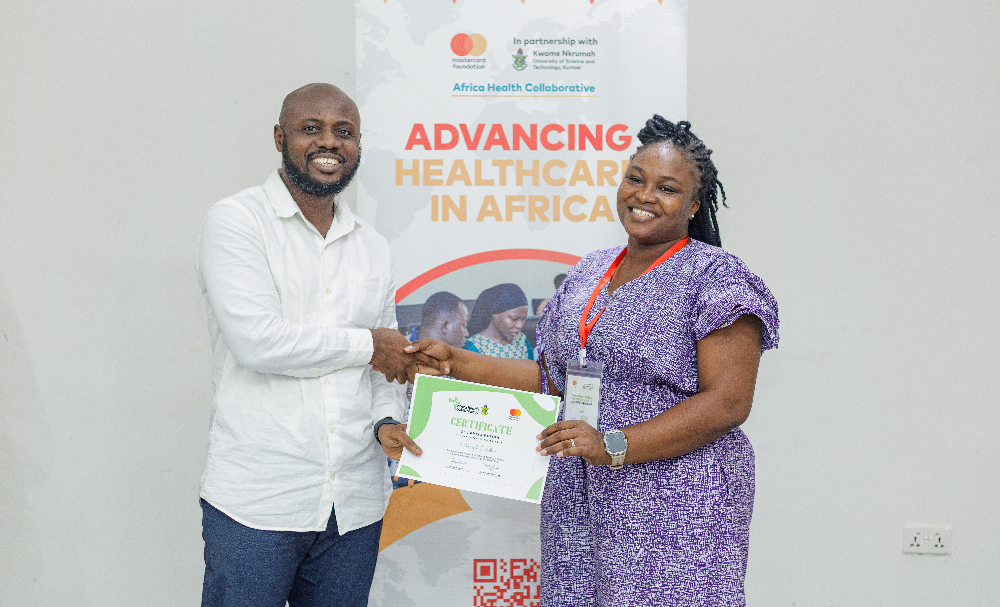
Among the participants was Ms. Sarah Pobee, a Station Manager with the National Ambulance Service at Ayawaso North, who described the training as transformative in reshaping her approach to problem-solving.
“We often don’t take time to identify the root causes of problems,” she said. “Through this training, I’ve learned to use tools like the problem tree to analyze causes, effects, and develop more effective solutions.”
She noted that this approach would improve how challenges are addressed within pre-hospital care systems. As part of her role, she conducts Continuous Professional Development (CPD) training and facilitates sessions at a paramedic training school areas where she plans to apply her new knowledge.
The training has also helped her identify entrepreneurial opportunities within her work, particularly in first aid training. She now aims to expand her outreach by incorporating local dialects to reach more communities.
“What I was already doing can be developed into a viable enterprise,” she added. “Adapting training to local contexts will increase impact.”

Also reflecting on the programme’s impact was Mr. Joshua Bill, a Public Health Officer with the Family Health Division of the Ghana Health Service.
He emphasized the importance of critical thinking in transforming healthcare challenges into opportunities.
“We don’t always have to complain about problems,” he noted. “We can analyze them, innovate, and turn them into solutions that improve services and create value.”
He added that the training has significantly boosted his confidence and ability to design practical, innovative interventions. He also highlighted the relevance of the 5S Kaizen concept, noting its emphasis on continuous improvement and knowledge sharing within healthcare facilities.
The CBT programme continues to demonstrate its impact by equipping health professionals with the tools, confidence, and mindset to drive innovation in their communities.
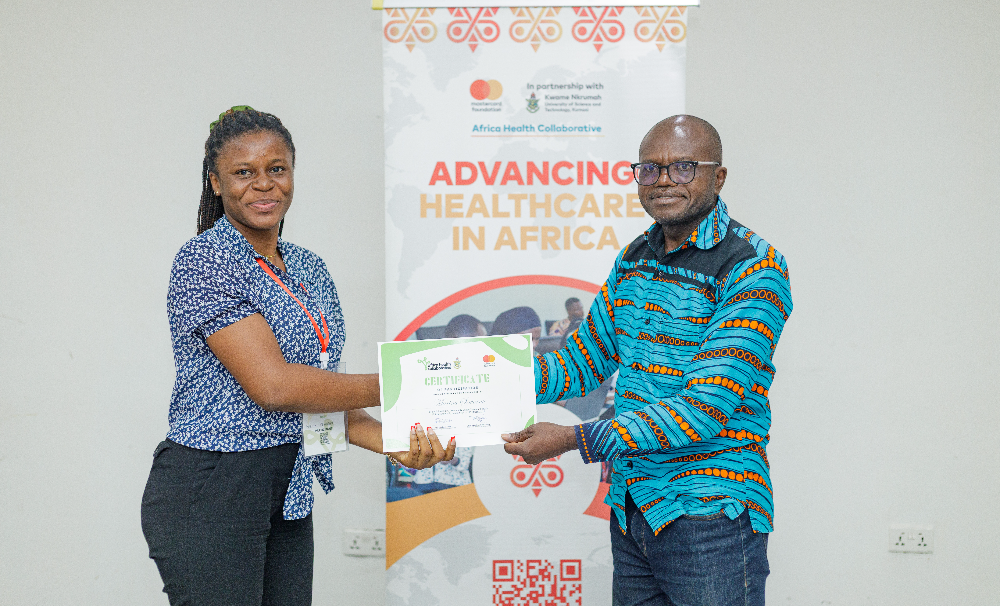
For Ms. Marina Somonu, a Public Health Nutritionist at the Volta Regional Hospital, the experience was both enlightening and empowering. She highlighted image theatre and design thinking as key takeaways that deepened her understanding of community engagement and human-centered problem-solving.
“Design thinking has taught me that solutions must begin from the community,” she explained.
Beyond technical skills, the programme inspired a significant mindset shift.
“Healthcare is not just about service it can also be approached as a business,” she said. “This has changed how I see opportunities within my work.”
She noted that the training has strengthened her confidence and ability to identify gaps and develop solutions. Now, she feels equipped to turn ideas into action.
“I can now develop a concrete business plan, and together with my team, we are committed to implementing our solution.”
| Story: Emmanuel Offei | Photos: Emmanuel Offei |


